


|
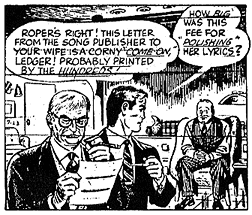
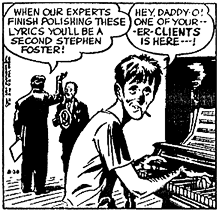
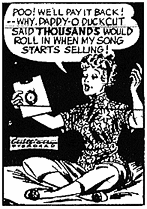
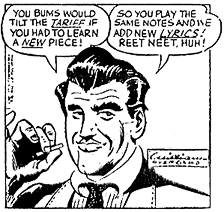
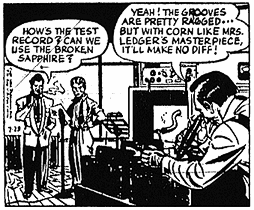
In a 13-week sequence running from July 11 to October 3, 1954, the daily adventure comic strip Steve Roper exposed the scandalous operations of the song-poem industry. The Daddy-O Duckcut sequence captured the behind-the-scenes workings of the industry more accurately than would be expected for a newspaper strip, indicating some research by Roper writer John Saunders. He added, of course, some exaggerations for dramatic effect. To the left are representative panels selected from the sequence; blame poorly-photographed microfilm and the ancient microfilm printers (which probably pre-date the sequence itself) at the Boston Public Library for the horizontal scratches and other schmutz. Following is a plot synopsis of the Daddy-O Duckcut sequence:
Rock-jawed Steve Roper is an investigative reporter and photographer for the muckraking monthly magazine Proof. Fresh from the successful completion of his story exposing the "gift from the dead" swindle, Roper is resting up between assignments. His publisher, Major McCoy, learns that avuncular Ralph Ledger, trusted long-time Proof accountant, has been caught embezzling over $3000 of Proof funds. Confronted with the allegation, Ledger explains that he took the money to support his sexy young wife Grace's hobby of writing poetry. A certain Daddy-O Duckcut, pompadoured president of the Hi-Art Publishing and Recording Co., had told Grace that her poems have surefire hit potential, if only they were put to music. However, the fee for Hi-Art's melody-setting and recording of Grace's poems has grown so large that Ledger has had to resort to embezzlement to pay the tab. But he assures Major McCoy that his intent all along was to pay it back, plus interest, once the finished recordings start burning up the charts.Thanks to Wayne Shirley of the Music Division of the Library of Congress for tipping us to the Daddy-O Duckcut sequence, which he recalled from his childhood. Steve Roper has traveled a curved path over its long history. Begun in 1936 as the ethnic humor strip Big Chief Wahoo, it remains active to this day, named Steve Roper & Mike Nomad in its current incarnation. Still written by John Saunders, it is one of the few remaining dramatic continuity strips.
|