"IF SHE EVER GETS OUT, I'M GONNA MATE HER WITH THE CENTAUR."

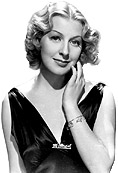 N 1994, AFTER years of tracing expired leads and numerous dead ends in search of more information and perhaps the current whereabouts of Dion McGregor, I finally located him in retirement in Oregon, and we began a correspondence that lasted the final six months of his life. That gave me only enough time to glean just a few passing details of his story and even fewer of his thoughts about the sleeptalking, but he seemed like a very nice man, and was more bewildered than put off by the slight rumblings of cult fame beginning to gather at the feet of the Dream World Of Dion McGregor. He told me that he was born in Manhattan on January 21, 1922, his father a banker, his mother a former dancer. He was given his name (rhymes with "lyin'," as he put it) in honor of Dionysus, the Greek god of swingin' good times. He was raised in Manhattan, Bronxville (a comfortable suburb just north of the Bronx), and Fort Lee, New Jersey, where his grandmother maintained an estate, but his family life essentially ended upon his arrival at adulthood. Obsessed with movies, he left college to study acting at the American Academy of Dramatic Arts on 54th Street, and then left that to head off to Hollywood, "to see if I could spot Myrna Loy or GERTRUDE MICHAEL or Bonita Granville on the Boulevard." The book version of The Dream World Of Dion McGregor is in fact dedicated to Michael, an off-beat actress of the '30s and '40s who was McGregor's personal muse.
In Hollywood he began to have some minor acting successes working for director Arch Oboler, who was sort of a pre-TV version of Rod Serling. Billed under the name David Bradford, McGregor had a small role as Claude Rains' son-in-law in Oboler's movie Strange Holiday, filmed in 1942 but not released until '46. McGregor also performed in some of Oboler's radio dramas, including one about V.J. Day starring Ingrid Bergman and another with Burgess Meredith playing the war correspondent Ernie Pyle. McGregor wrote that the "David Bradford" tag was bestowed upon him "because Oboler got tired of me correcting his pronunciation of my name."
Disillusioned with what he perceived as a going-nowhere acting career and reverting to his given name, McGregor returned to New York around 1951 or '52, vowing never to go back to California. In New York he took up with a struggling playwright and filmmaker named Charles Colby, who in turn introduced him to a pair of young composers who would give him the means to a new profession. While it was Bob Cobert who prodded McGregor into trying his hand at lyric writing, both he and Carleton Carpenter benefited by collaborating with McGregor on numerous songs over the next few years. McGregor never did earn a solid living as a lyricist, but he was good at it, he appreciated the expression it offered him, and it kept him off the streets. Cobert, who went on to score the Dark Shadows TV series among other successful soundtracks, wrote songs with McGregor that were recorded by The DeCastro Sisters, The Freddy Martin Orchestra ("Love Is A Gamble"), and the married team of Neal Hefti and Frances Wayne, who cut their songs "Alone In New Orleans" and "Wednesday's Child." Altogether they had about a dozen songs recorded in this period, but none ever amounted to anything major.
Using punning pseudonyms such as Si Amm and Hack & Sack, McGregor and Cobert worked for a few months in 1953 doctoring "song-poems" submitted by amateur songwriters. Uncommon for the shady world of song-poem music, one of their rewrites was actually picked up for release by a major label when Coral Records recorded Judy Tremaine singing "Chain Lightning."
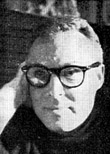 McGREGOR and Cobert nearly hit it big with their next project, a musical interpretation of Frankie And Johnny. In a novel move, MGM released it in 1957 in a form they billed as "an original musical for LP records," meaning an original cast album for a show that had yet to be produced. The album was well-received and the property was optioned for Broadway, but no production of it was ever launched. A musical McGregor and Cobert wrote based on Peter DeVries's novel The Mackerel Plaza, with a book by Jacqueline Babbin, also attracted serious attention, but it too went unproduced.
Simultaneous to his collaborations with Cobert, McGregor was also writing songs with Carleton Carpenter, a gangly fellow who sang and danced the boy-next-door role in several MGM musicals. In 1950 he appeared in Two Weeks With Love, where he sang a charming duet with Debbie Reynolds called "Aba Daba Honeymoon." Released as a single the following year, the song became a smash hit and is now regarded as a standard.
In the summer of 1955 Carpenter was contacted by an old acquaintance of his named Michael Barr. They had originally met as high school juniors a dozen years earlier at a Northwestern University drama seminar (also attended by '70s TV star Claude Akins), and had stayed in sporadic contact ever since. Barr, also a composer, was fresh off the first recording of one of his songs, "Kicks," released as a single on Capitol by jazz singer June Christy. Now able to address Carpenter as a peer, Barr informed him of his recent success. To Barr's surprise, Carpenter was already familiar with "Kicks" through his lyricist McGregor, who had bought Christy's record and was buzzing about it. It was inevitable, then, that Carpenter should introduce McGregor and Barr to each other, a momentous occasion in the narrow universe of this story. The two hit it off immediately. While McGregor continued to write for a while with both Cobert and Carpenter, he soon began writing with Barr as well and before long the two were exclusive collaborators.
McGregor and Barr's first song together was "Coming Back For More," debuted in 1956 by singer/actress Peg Murray at, appropriately, The Dream Room, Hal Wenton's Greenwich Village nitery. Murray, who would win a Tony Award in 1967 for her supporting role in Cabaret, soon added several other Barr/McGregor compositions to her nightclub act. The first recording of one of their songs was by the tiny-voiced chanteuse Blossom Dearie, who included "Try Your Wings" on her 1957 Verve album Give Him The Oo-La-La. The number was later appropriated by jazz vocalist Anita O'Day, who dropped the first word from the title and claimed songwriting credit for herself. The team's next recording was "Be My Next," cut by Joel Grey for Capitol in '58. Glory Records released a competing version of the song, recorded by McGregor and Barr themselves under the name Mac & Mike, as the flip side to another of their songs, the Everlyesque "Rockin' Teens." In '59 Dearie recorded another Barr/McGregor song, "Hello Love," for her album My Gentleman Friend, again on Verve. Off-Broadway impresario Julius Monk included their "The Hate Song" in the 1960 version of his annual Upstairs At The Downstairs revues. The song, a catalogue of mock-reviled celebrities, appeared on the album Dressed To The Nines, a cast recording released by MGM in '61. Several lines of its lyrics were excerpted in a Newsweek review of the revue.
chapter 7:

THAT'S THE BEST, THAT'S THE BEST, THAT'S THE VERY BEST ... HEE-HEE-HEE ... YAAAAAGGGGGHHHHHHH!
CD home page:
DION McGREGOR DREAMS AGAIN